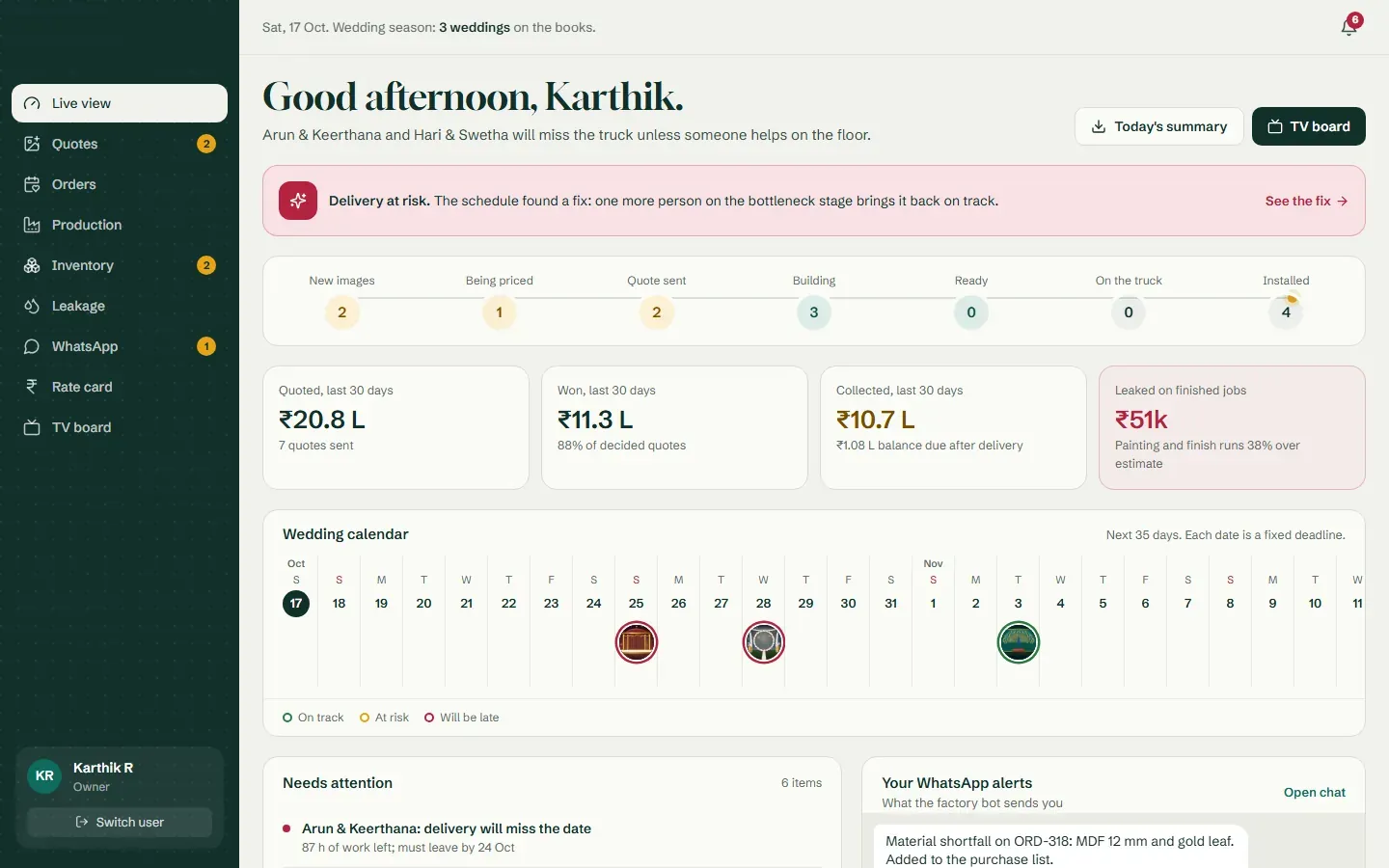
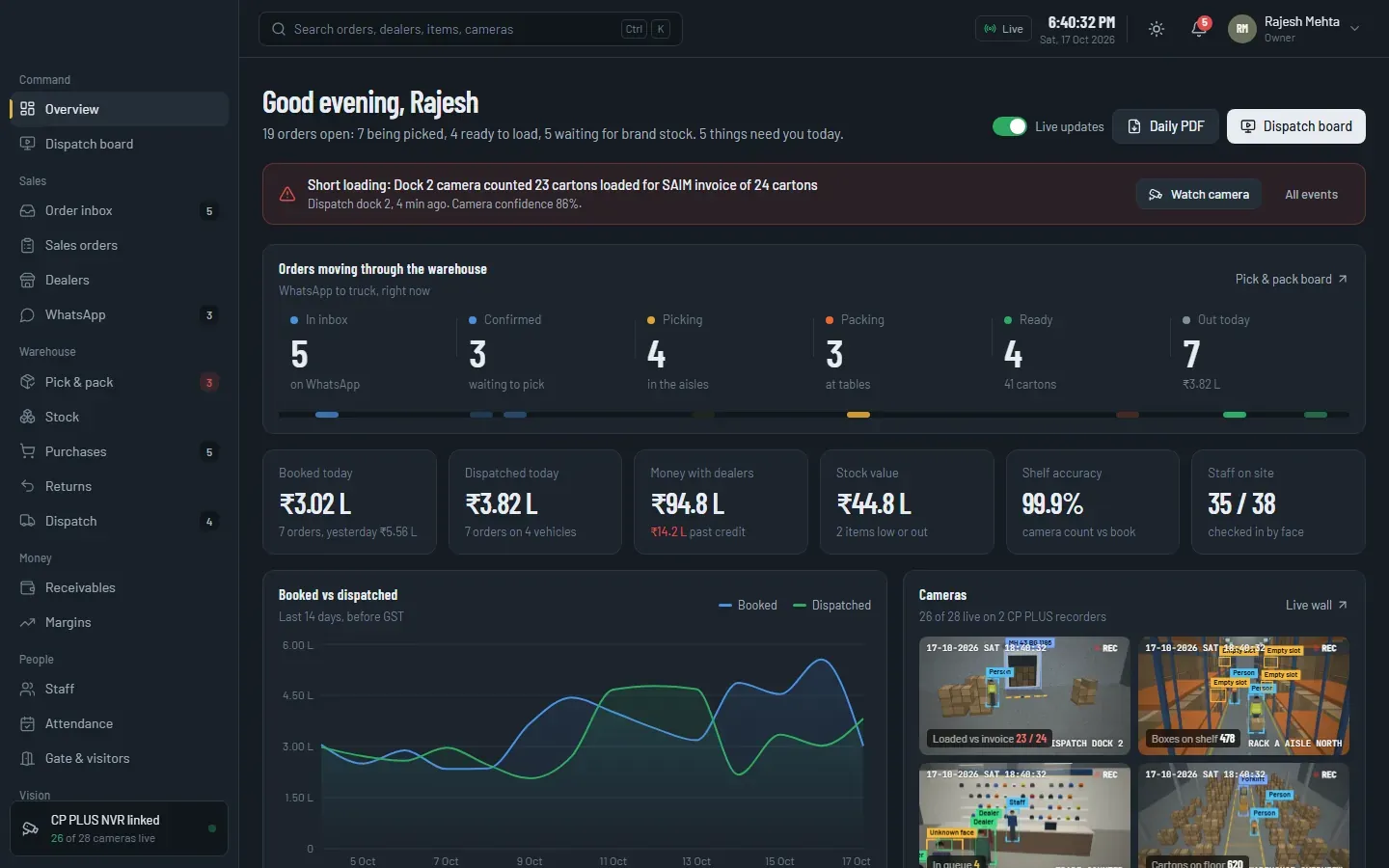
Every order, every kilo of raw material, every rupee of waste, accounted for in real time.
Orders arrived as WhatsApp messages, production lived in registers, and material loss surfaced only at month-end stock-taking.
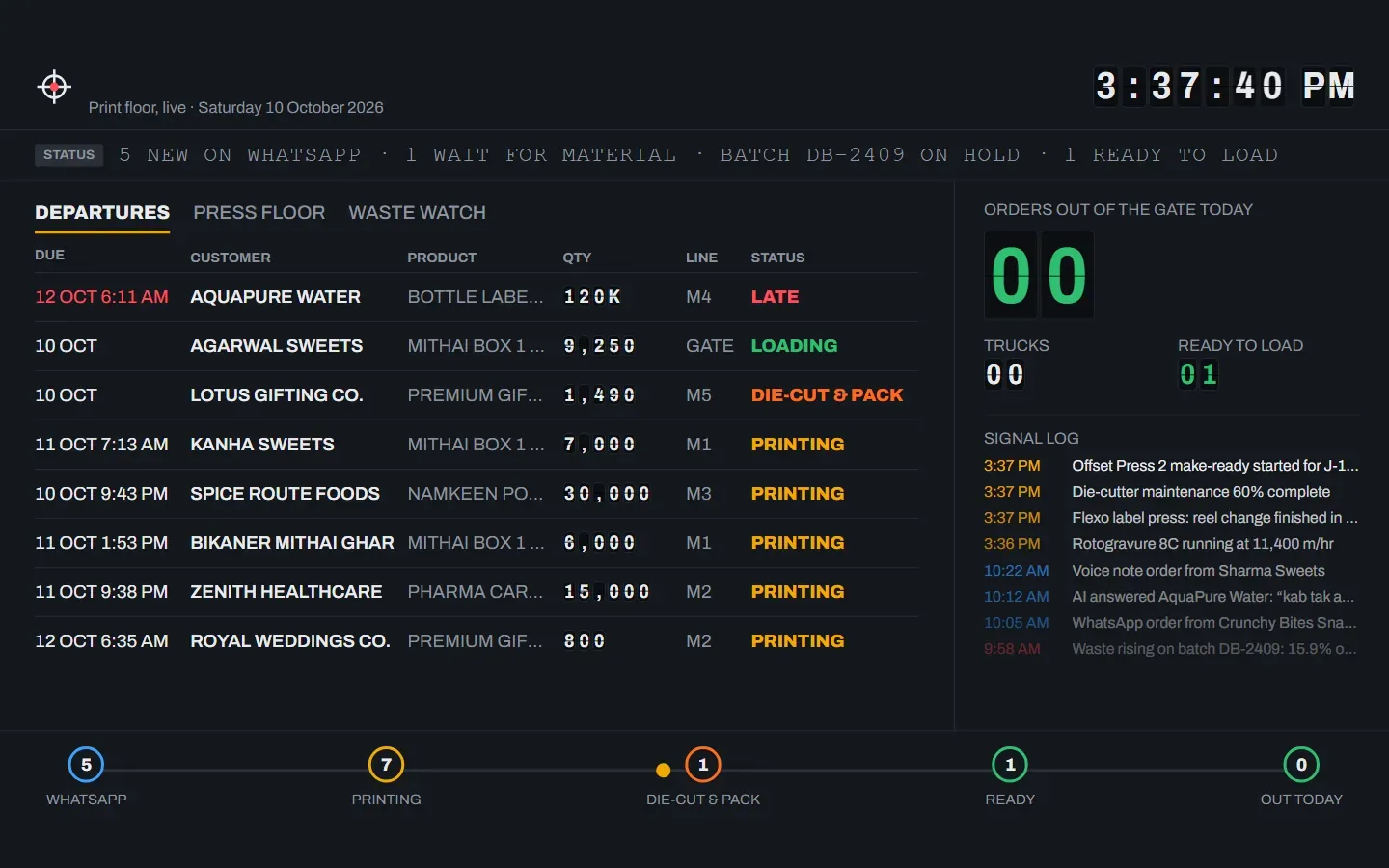
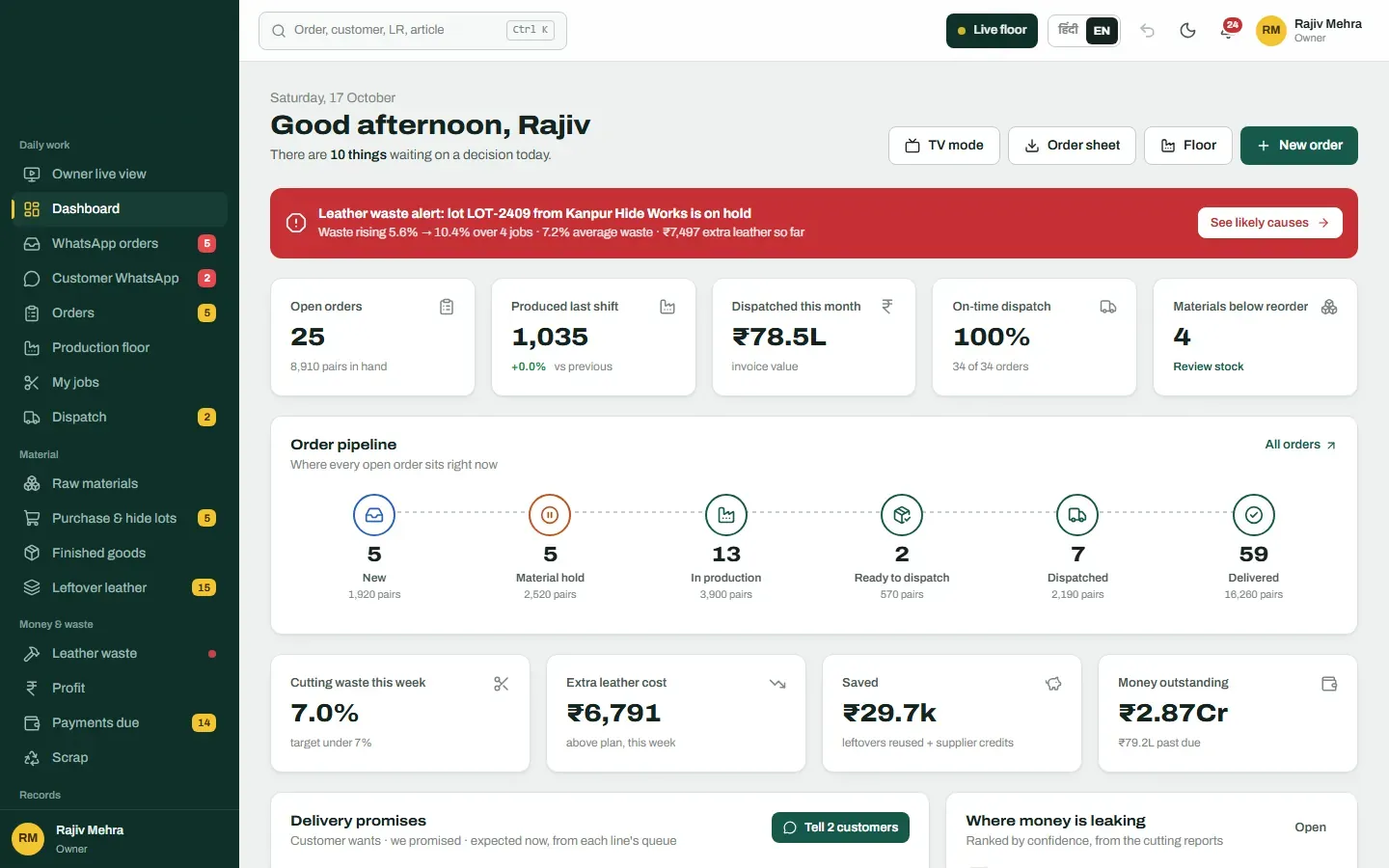
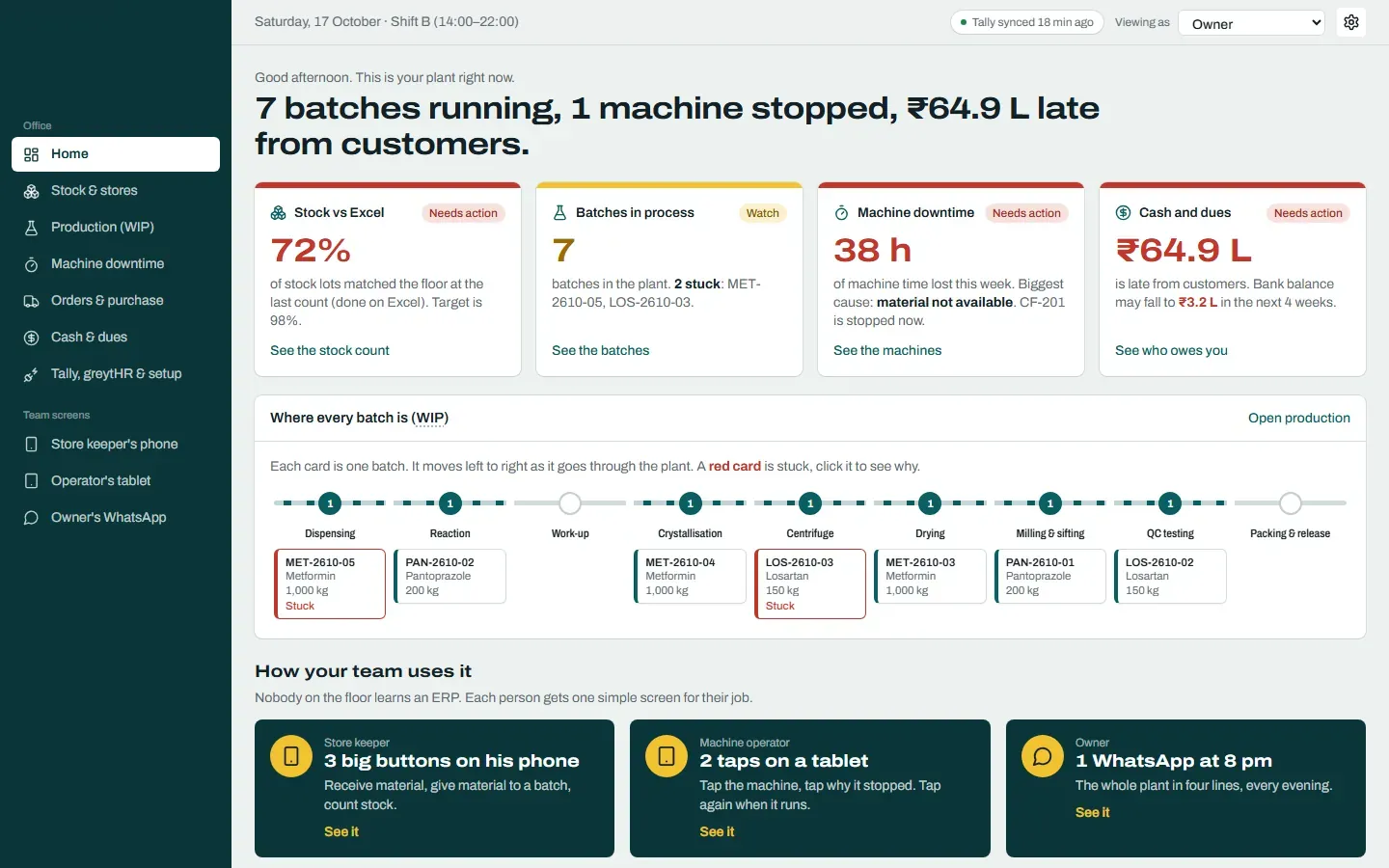
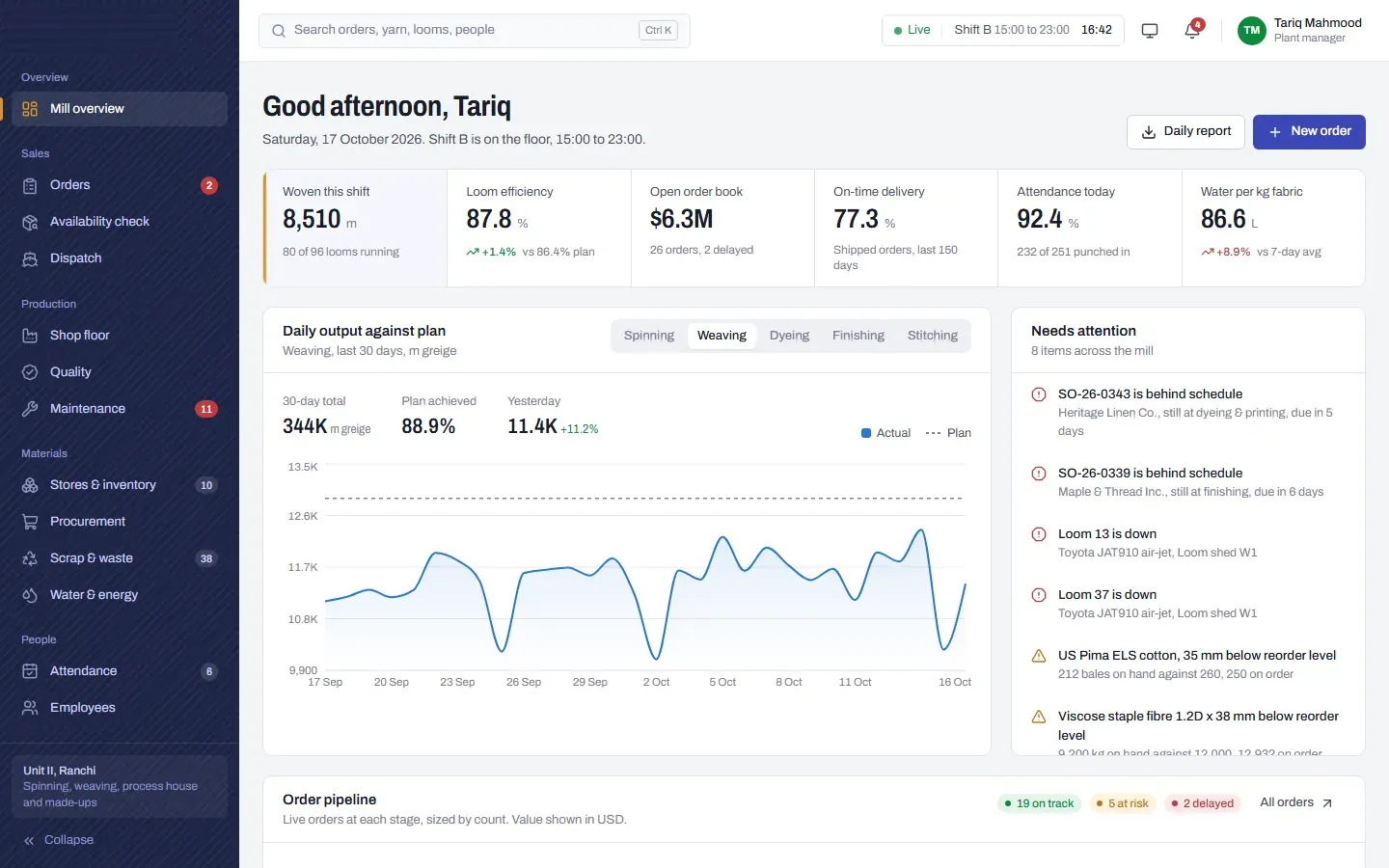
We engineered an order-to-dispatch operating system that models the plant as a single event stream: from the raw-material batch a job was drawn from, through every machine and furnace cycle, to the truck and LR number it left on.
- Workspaces
- Role-scoped consoles for owner, order desk, production, operator, store and dispatch
- Assets modelled
- Production machines and batch furnaces, each with its own queue and cycle time
- Channels
- WhatsApp Business API, server-rendered PDF digests, Excel OS sheets
- Languages
- English and Hindi, switchable per user
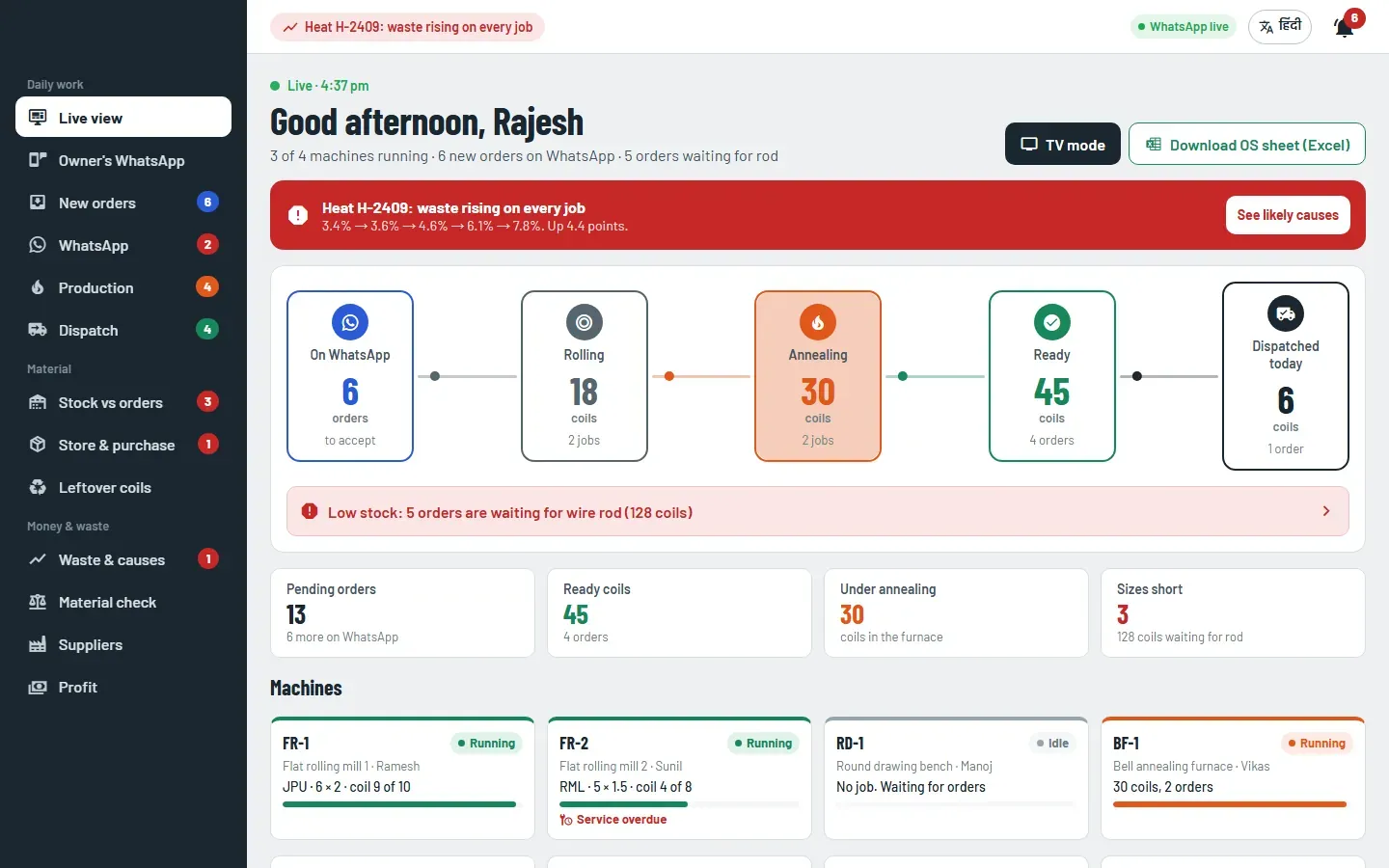
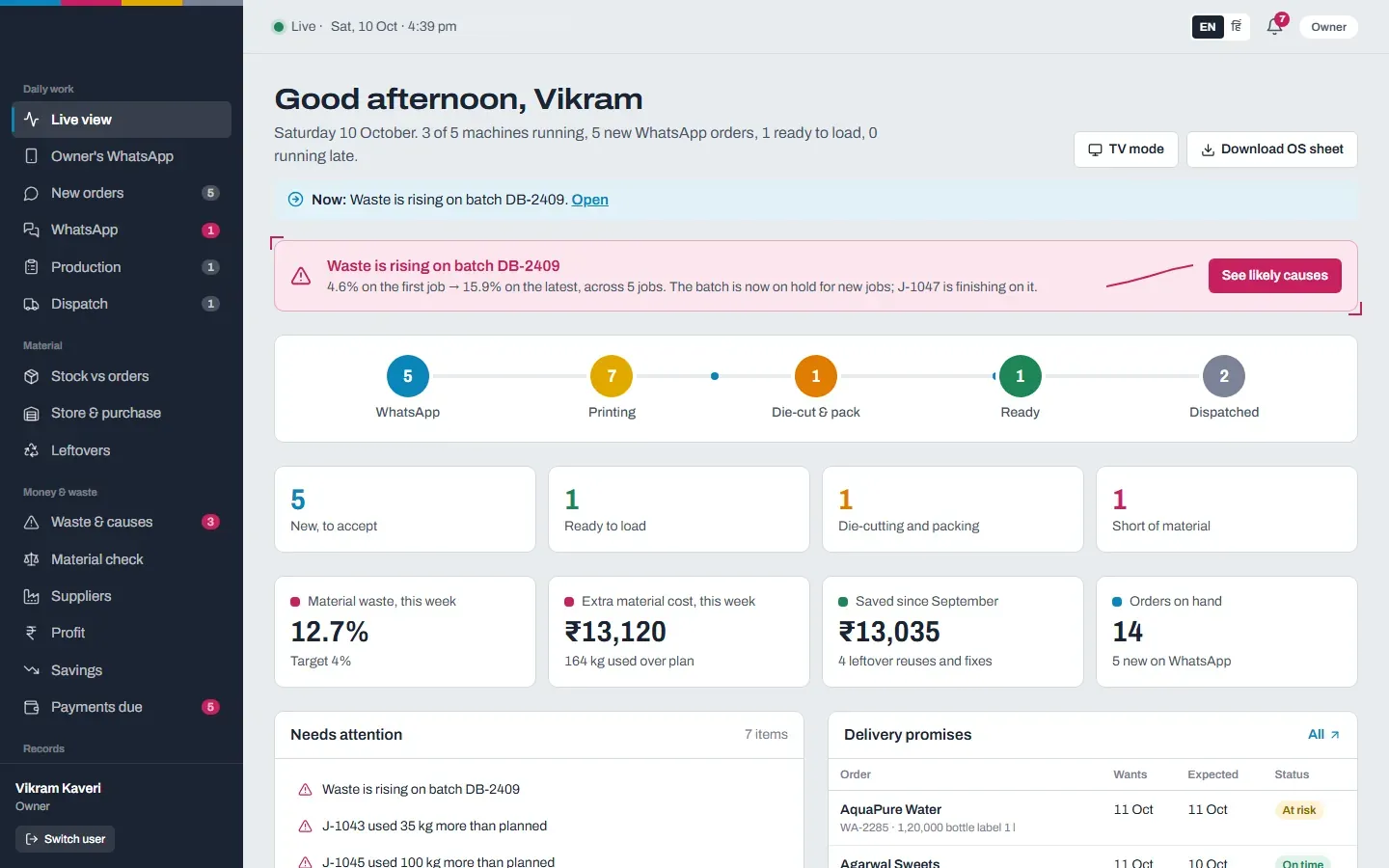
Recorded in use: the waste alert on the owner’s live view opens straight into the root cause, batch by batch.
Sanitised screen, with customer names, contacts and figures masked
How an order moves through the system
- 1
Order intake
WhatsApp orders parsed into size, grade, quantity and due date, then accepted at the order desk.
- 2
Material reservation
Stock is matched against raw-material batches, oldest first; shortfalls raise purchase requests.
- 3
Machine scheduling
Jobs sequenced across machines by size changeover and due date.
- 4
Process cycles
Furnace cycles tracked per batch, with dwell-time alerts.
- 5
Dispatch
Trucks loaded against orders; LR number and invoice pushed to the customer on WhatsApp.
- 6
Close the loop
Payments chased, waste costed, and an 8 pm digest delivered to the owner.
What makes it hold up
Material balance per job
Waste is never estimated. Every job closes material issued against material returned and good output, so loss is attributable to a batch, a machine, a shift and an operator.
Drift detection on batches
A statistical watch on per-batch waste caught one batch climbing 3.4% → 7.8% across five jobs, priced the overrun and projected the cost of continuing.
Leakage ledger
Idle leftover stock, machine stops and unaccounted material are each valued in rupees, so the owner sees where margin is leaking, ranked, every week.